2026-09-04 · David Harlan
Black Mold vs Regular Mold: How To Tell The Difference
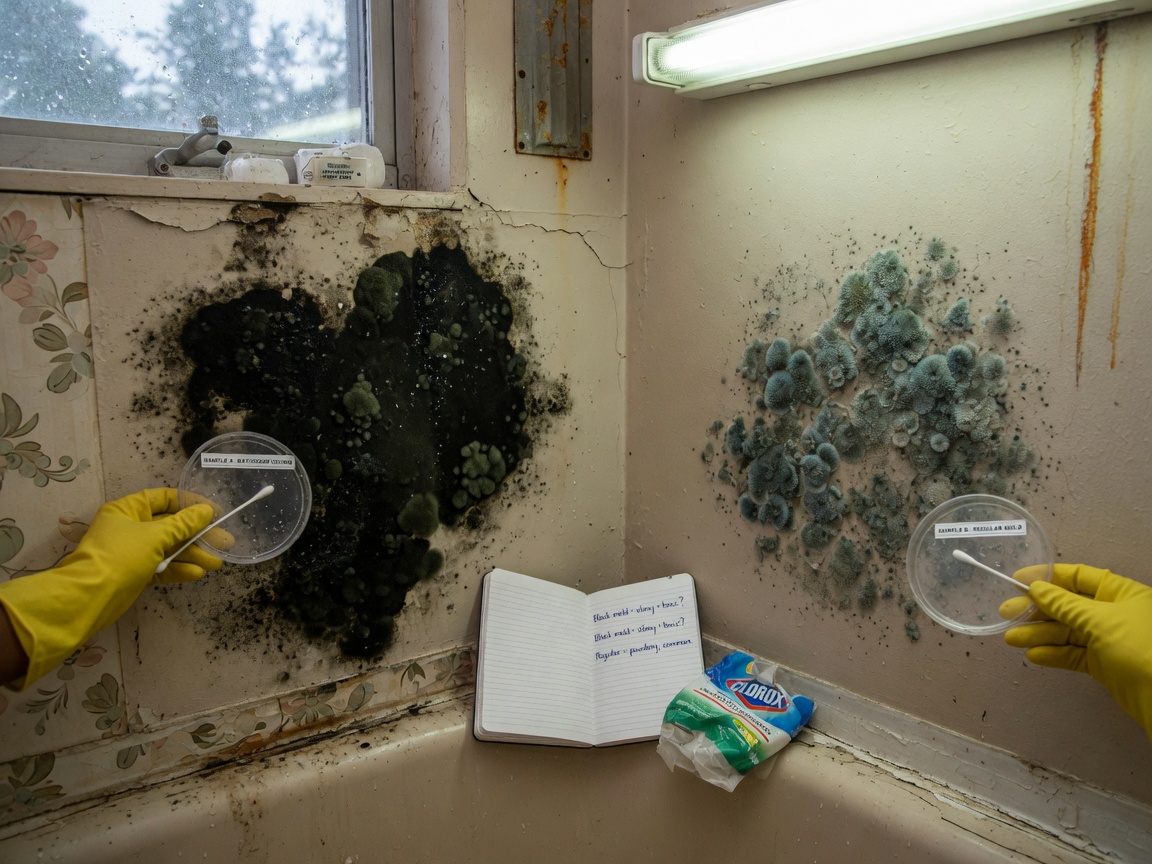
Black mold typically shows as dark greenish-black, slimy growth in persistently wet areas while regular mold often appears in shades of green, white, or brown with a powdery or fuzzy texture. Homeowners in Greensboro can start by checking moisture-prone spots in older housing stock found in neighborhoods such as Fisher Park and Westerwood, where the humid subtropical climate with hot summers and mild winters promotes hidden growth behind walls or in crawl spaces.
Visual and Textural Differences
Black mold, often linked to Stachybotrys chartarum, forms thick, wet-looking black colonies that smear when touched and release a musty odor stronger than most other types. Regular molds like Aspergillus or Penicillium usually present as powdery green or white spots that stay dry to the touch and spread more evenly across surfaces. In Guilford County homes built before 1970, such as those in Lindley Park and Sunset Hills, condensation from mild winters combines with summer humidity to create ideal conditions for both, but black mold favors cellulose materials like drywall and wood that stay saturated for weeks. Checking under sinks or around windows after heavy rains reveals these patterns quickly. Professional testing distinguishes species when visual cues alone fall short, especially in attics where insulation hides the extent.
Typical Growth Spots in Local Housing
Greensboro's older neighborhoods like Downtown Greensboro and Westerwood feature crawl spaces and basements that trap moisture from the area's clay-heavy soils and occasional flooding near the Haw River tributaries. Black mold often clusters in these dark, poorly ventilated zones after roof leaks or plumbing failures, while regular mold spreads across bathroom ceilings and around HVAC registers during the hot, humid summers. Homes near the Greensboro Coliseum or International Civil Rights Center & Museum area share similar risks due to shared building ages and tree cover that limits airflow. Residents in nearby Winston-Salem report parallel issues in comparable stock, confirming the regional pattern tied to the same climate. Inspecting these locations seasonally prevents small colonies from expanding into structural damage.
Health Considerations and Testing Steps
Exposure to black mold can trigger stronger respiratory reactions in sensitive individuals compared to many regular molds, though both require prompt attention in enclosed spaces. Start by noting any persistent musty smell or unexplained allergy symptoms, then photograph affected areas without disturbing them. Mold inspection provides lab confirmation of species and extent, guiding whether targeted cleaning suffices or full containment is needed. In Fisher Park homes, for example, hidden growth in wall cavities often demands air sampling because visual checks miss it. The process typically involves surface swabs and moisture meters to map water intrusion sources before any remediation begins.
When Professional Removal Becomes Necessary
If growth exceeds a few square feet or returns after basic drying attempts, contact specialists for containment and removal rather than DIY methods that can spread spores. Black mold removal follows strict protocols including negative air pressure and HEPA filtration suited to Greensboro's older plaster-and-lath construction. Homeowners should also review how long does mold remediation take in Greensboro to set realistic timelines around work and living arrangements. Regular mold in less critical spots may respond to detergent cleaning and dehumidification, but black mold in crawl spaces or attics almost always requires licensed handling to avoid cross-contamination to living areas.
Prevention Tailored to Local Conditions
Maintaining indoor humidity below 50 percent during Greensboro's hot summers and using exhaust fans in bathrooms reduces both black and regular mold risks across Lindley Park and Sunset Hills properties. Sealing foundation cracks and improving attic ventilation addresses the mild winter condensation common in Guilford County. Checking gutters and grading around homes near the Greensboro Science Center prevents water pooling that feeds hidden colonies. These steps, combined with annual inspections, keep problems small in the region's humid subtropical environment where rapid summer growth can outpace casual observation.