2026-09-04 · David Harlan
Winter Humidity And Attic Mold In Greensboro Homes
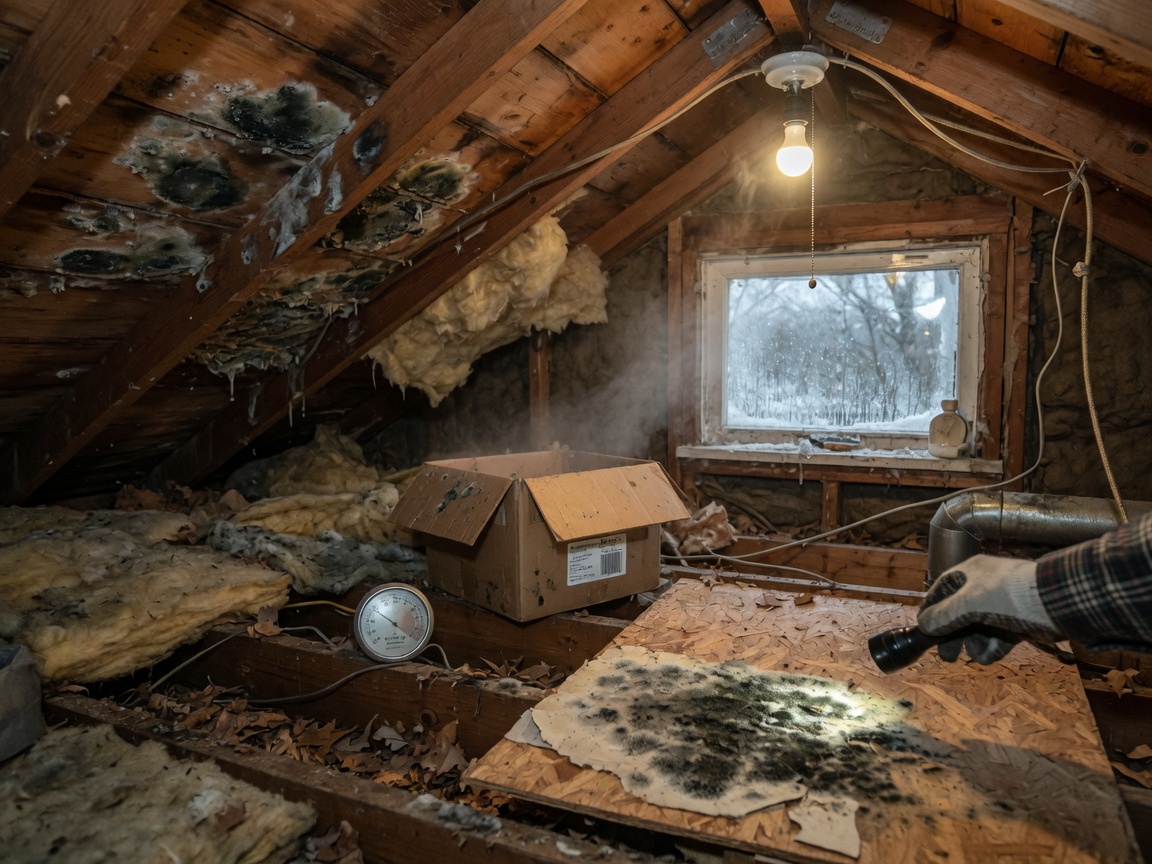
In Greensboro's humid subtropical climate, attic mold often forms during winter when indoor heating raises humidity levels that become trapped in poorly ventilated spaces, allowing condensation to build on roof sheathing even as outdoor temperatures stay mild.
How Local Climate Patterns Fuel Attic Moisture
Guilford County experiences mild winters that rarely drop low enough to freeze moisture, so humidity from daily activities lingers inside homes instead of dissipating. This creates steady vapor drive into attics where temperatures hover just above outdoor readings. Homes in Fisher Park and Westerwood, many built before 1950 with original roof structures, lack the ridge vents or soffit intakes common in newer builds. The result is consistent dew point conditions on cold roof surfaces during overnight hours when heating systems cycle on and off. Nearby Winston-Salem shares similar Piedmont Triad weather, but Greensboro's slightly higher average winter humidity readings make attic condensation more frequent in single-story ranch homes common throughout Lindley Park and Sunset Hills.
Housing Stock and Attic Conditions in Greensboro Neighborhoods
Older homes in Downtown Greensboro and surrounding areas frequently feature knob-and-tube wiring and minimal insulation that allows warm air to rise unchecked into attics. These conditions combine with mild winter days to keep relative humidity above 60 percent in enclosed roof spaces for weeks at a time. Residents notice dark staining along rafters after several consecutive days of indoor heating without fresh air exchange. The terrain in these neighborhoods sits on clay-heavy soils that retain moisture from fall rains, adding another slow-release humidity source through foundation walls and into living spaces that eventually migrate upward.
Practical Steps for Identifying and Managing Attic Mold
Start by checking for musty odors near attic access points during the first cold snap of the season when heating begins. Use a moisture meter on roof decking to confirm readings above 16 percent, which signals ongoing condensation risk. Improve airflow by adding or clearing existing vents before temperatures drop further. For confirmed growth, professional assessment through mold inspection helps determine extent without disturbing spores. Homeowners in areas like Pleasant Garden often combine this with targeted attic mold removal services that focus on source control rather than surface cleaning alone. Review details on common causes of mold growth in Piedmont Triad homes to understand how seasonal shifts interact with local building practices.
Long-Term Prevention Tailored to Greensboro Conditions
Maintain indoor humidity between 40 and 50 percent through the winter by running bath and kitchen exhaust fans for 20 minutes after use. Seal attic bypasses around chimneys and recessed lights to limit warm air leakage. In homes with crawl spaces, ensure ground vapor barriers remain intact since moisture from below can travel upward in Guilford County's mild winter conditions. Schedule annual checks before December to catch early growth before it spreads across larger rafter sections. These steps address the specific humidity retention patterns seen in Greensboro rather than generic national advice.