2026-09-04 · David Harlan
How To Spot Hidden Mold In Greensboro Crawl Spaces
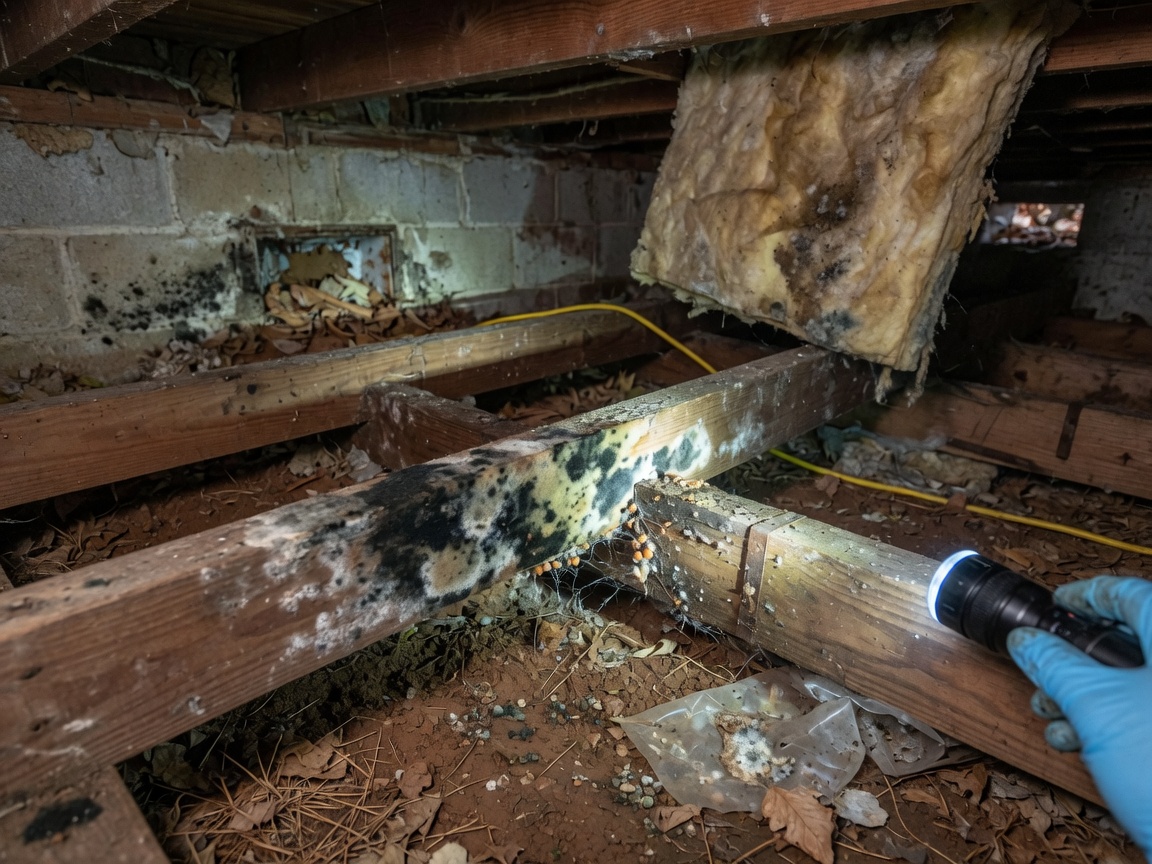
Hidden mold in Greensboro crawl spaces typically reveals itself through persistent musty odors rising through floors, dark stains on wooden joists, or soft spots in subflooring, especially in homes over 40 years old across neighborhoods like Fisher Park and Westerwood. These signs appear more often during hot summers when humidity drives condensation in unventilated spaces beneath older housing stock in Guilford County. Checking these indicators early prevents larger issues that affect air quality upstairs.
Common Visual and Odor Indicators
Mold growth stays concealed beneath insulation or along sill plates in many Greensboro crawl spaces, yet it produces a distinct earthy smell that intensifies after rain. Look for white or black discoloration on floor joists and rim boards, along with powdery residue on soil or vapor barriers. In Lindley Park and Sunset Hills, older foundations often trap moisture from mild winters that never fully dry out the space. Warped baseboards or buckling hardwood above the crawl space signal ongoing hidden activity. Homeowners should use a flashlight during dry periods to inspect without disturbing settled spores. These patterns differ from attic issues because crawl spaces sit closer to ground moisture sources common throughout the county.
How Local Climate and Housing Stock Contribute
Guilford County's humid subtropical conditions with hot summers create steady condensation on cool pipes and ducts in crawl spaces, feeding mold on untreated lumber. Mild winters keep soil damp year-round instead of freezing it solid, unlike areas near Winston-Salem that sometimes see sharper seasonal shifts. Pre-1980 homes in Downtown Greensboro and Fisher Park frequently lack modern vapor barriers or sealed vents, allowing humid air to circulate freely. Terrain with slight slopes in Westerwood directs rainwater toward foundations, raising interior humidity levels. These factors combine to hide growth behind insulation batts or on the underside of subfloors where temperatures stay lower than the living space above.
Step-by-Step Inspection Process
Begin by entering the crawl space through an exterior access door during daylight hours when humidity is lowest. Scan all visible wood members for discoloration while noting any standing water or damp soil patches. Use a moisture meter on joists and the subfloor to record readings above 16 percent, which indicates conditions favoring hidden mold. Check around plumbing penetrations and HVAC returns for drips that create localized wet zones. Document findings with photos before exiting, then compare odors inside the home near HVAC returns. This methodical approach reveals problems before they spread to living areas in neighborhoods like Lindley Park.
When Professional Assessment Becomes Necessary
Persistent odors or moisture readings above 20 percent warrant a full Crawl Space Mold Removal evaluation rather than continued DIY checks. Compare findings against guidance in DIY vs Professional Mold Removal: What Greensboro Homeowners Should Know to decide next steps. Homes near the Greensboro Coliseum or International Civil Rights Center & Museum often share similar foundation ages that benefit from targeted testing. Avoid disturbing visible growth during inspection to limit spore release into the home. Professional equipment measures hidden moisture behind walls that standard tools miss.