2026-09-04 · David Harlan
Preventing Mold After Heavy Summer Storms In Greensboro
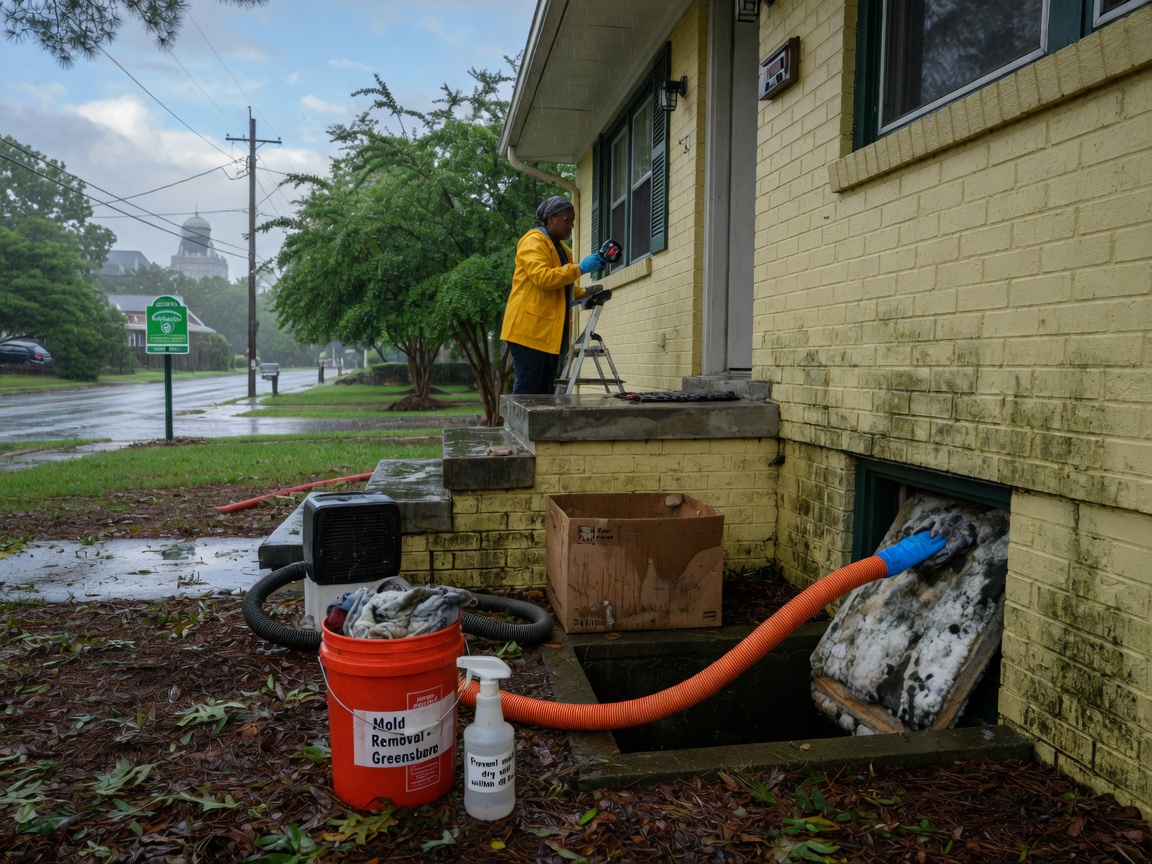
Heavy summer storms in Greensboro often drop several inches of rain in hours, and mold can begin growing within 24-48 hours on wet materials if moisture is not removed. Homes in Guilford County face elevated risk because of the region's hot, humid summers that keep relative humidity above 70 percent for days afterward, especially in older housing stock found in Downtown Greensboro, Fisher Park, and Lindley Park.
Storm-Driven Moisture Entry Points in Greensboro Homes
Summer thunderstorms frequently overwhelm gutters and downspouts on pre-1970 homes common throughout Westerwood and Sunset Hills, sending water under siding and into wall cavities. Attics in these older structures often lack modern ridge venting, so trapped humidity from roof leaks condenses on rafters and sheathing once temperatures drop overnight. Crawl spaces in single-story houses across Lindley Park sit close to the water table, allowing storm runoff to saturate soil and push moisture through pier-and-beam foundations. After repeated storms, cellulose insulation in walls and ceilings holds water long enough for spores to colonize, particularly when mild winters fail to dry materials thoroughly. Checking roof penetrations around plumbing vents and skylights immediately after each event prevents hidden saturation that later shows up as ceiling stains near the Greensboro Coliseum area.
First 48 Hours: Drying and Containment Steps
Remove standing water with a wet-dry vacuum within hours of the storm, then run dehumidifiers set to 45-50 percent in affected rooms to pull moisture from drywall and subfloors. Open windows on opposite sides of the house during lower-humidity evening hours to create cross-ventilation, but close them again when outdoor dew points rise. Focus on attics and crawl spaces first because those areas rarely receive airflow from household fans. Place moisture meters against baseboards and floor joists daily; readings above 15 percent indicate continued risk. If drywall feels cool or soft to the touch two days after the rain, cut out the bottom 12-18 inches to allow framing to dry before any new insulation is installed. Homeowners in Jamestown and Pleasant Garden often discover that carpet pads under hardwood floors retain water even after surface drying, requiring prompt removal to avoid hidden colonies.
Inspecting High-Risk Areas After Repeated Storms
Walk through every level with a flashlight and look for discoloration along baseboards or around window sills, especially in Fisher Park homes with original plaster walls that absorb and hold moisture. In crawl spaces, shine a light along sill plates and check for white or black growth on floor joists near exterior vents that may have allowed wind-driven rain inside. Attics require checking insulation for dark patches or a musty smell that lingers after the storm passes. Use a moisture meter on the underside of roof decking near valleys and chimneys, where wind often forces water under shingles. Basements in older Westerwood properties frequently develop seepage along the foundation wall where grading slopes toward the house. Document any visible growth with photos and note the date of the last storm so patterns become clear over multiple seasons.
Long-Term Prevention Tailored to Local Conditions
Re-grade soil around the foundation so it slopes away at least six inches over the first ten feet to keep storm water from pooling against brick or block walls. Install or upgrade gutter guards and extend downspouts at least five feet from the house, a step that reduces splash-back into crawl-space vents common in Sunset Hills. Add a sealed vapor barrier and dehumidifier in crawl spaces to maintain 50-55 percent humidity year-round, countering the mild winters that never fully dry the soil. Replace cellulose insulation with closed-cell spray foam in attic knee walls where condensation forms after hot summer rains. Schedule a professional mold inspection each spring before hurricane season to identify weak points before the next heavy storm arrives. Residents near Winston-Salem who commute through Kernersville can apply the same grading and ventilation practices because the same weather systems affect both counties.
Knowing When Professional Help Becomes Necessary
If moisture readings remain above 15 percent after five days of drying or if visible growth covers more than ten square feet, contact a remediation specialist rather than attempting removal yourself. Homes with HVAC systems that pull air from crawl spaces or attics can spread spores throughout the living areas once the system restarts. Persistent odors after drying indicate hidden growth behind walls or under flooring that requires containment and HEPA filtration. For emergency situations following back-to-back storms, emergency mold removal teams can isolate affected zones and prevent cross-contamination to unaffected rooms. Review the article What To Do Immediately After Discovering Mold In Your Home for additional checklists that complement these storm-specific steps. Owners in McLeansville and Gibsonville often find that addressing issues within the first week after a storm keeps remediation costs lower than waiting until fall humidity returns.