Greensboro's humid subtropical climate brings hot summers and frequent humidity spikes that drive mold growth in crawl spaces and attics of homes built before 1970 in neighborhoods like Fisher Park and Westerwood. Older plaster and lath construction plus limited ventilation in these Guilford County properties often hides colonies behind walls until moisture from summer storms or winter condensation triggers visible outbreaks. Remediation crews must account for tight lot lines and shared walls in these historic blocks, where airflow patterns differ from newer subdivisions near the Greensboro Coliseum.
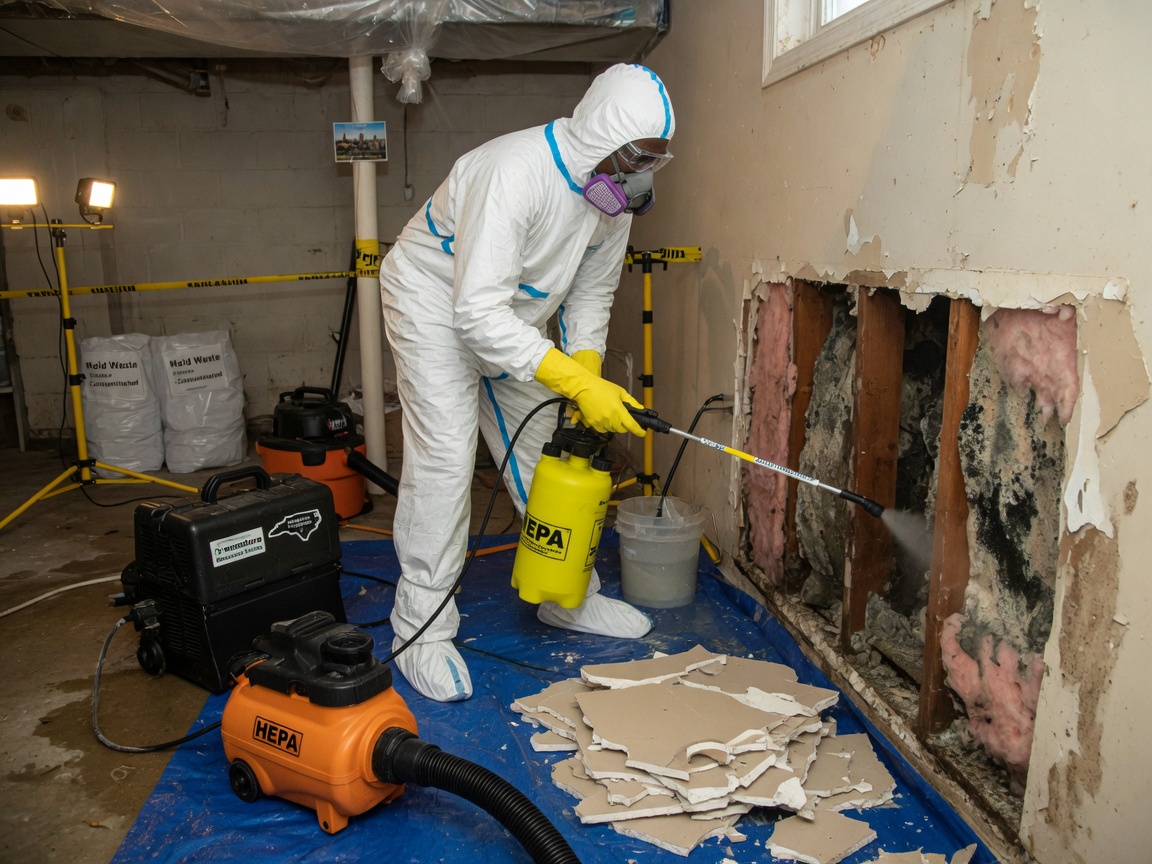
Post-storm water intrusion from the nearby Piedmont terrain commonly affects basements in Lindley Park and Sunset Hills, where clay-heavy soils slow drainage and keep foundations damp for weeks. Technicians performing mold removal greensboro jobs here routinely cut back affected drywall to 18 inches beyond visible growth and use negative air machines to protect adjacent rooms in compact floor plans typical of mid-century homes. Failure to address hidden moisture in HVAC returns or under pier-and-beam floors leads to rapid regrowth once temperatures climb again.
Guilford County building practices from the 1950s and 1960s left many properties with uninsulated rim joists and single-pane windows that create persistent cold surfaces. During mild winters these surfaces collect condensation that feeds surface mold on framing members. Remediation protocols require HEPA vacuuming followed by antimicrobial application on porous materials that cannot be fully removed without compromising structural integrity in these older Greensboro structures.
Technician insight
In Greensboro the thing that catches most people out with mold remediation is hidden growth on the back side of plaster in 1940s–1960s homes in Fisher Park and Westerwood where single-pane windows and minimal attic ventilation let summer humidity reach cold surfaces for months before any musty smell appears downstairs.
Hidden Growth Behind Plaster in Lindley Park
A homeowner in Lindley Park noticed musty odors near the kitchen after heavy July rains. Inspection found elevated moisture in a shared wall with an unvented laundry room where clay soil kept the foundation damp. Crews removed affected plaster and insulation, treated framing, and installed improved ventilation. Odors disappeared and follow-up testing showed levels matching outdoor air.
Mold Remediation Services We Offer
✓Attic Mold Remediation
Removes colonies from rafters and insulation in older Greensboro attics where summer humidity condenses against unvented roof decks in Fisher Park homes.
✓Crawl Space Mold Treatment
Treats pier-and-beam foundations common in Westerwood and Lindley Park where clay soils trap moisture and promote growth on joists and subfloors.
✓Bathroom Mold Remediation
Targets tile grout and drywall behind showers in compact Downtown Greensboro apartments where poor exhaust ventilation allows rapid surface spread.
✓HVAC Mold Cleaning
Cleans coils and ductwork in homes near the Greensboro Science Center where condensation from high summer loads feeds colonies inside metal runs.
✓Post-Flood Mold Remediation
Addresses water-damaged materials after heavy rains that pool in low-lying Sunset Hills yards before draining toward nearby Winston-Salem watersheds.
✓Basement Mold Removal
Remediates below-grade walls in mid-century homes throughout Guilford County where groundwater seepage keeps concrete damp year-round.
Mold Remediation Cost in Greensboro, NC
| Service | Typical Range | What Affects It |
|---|---|---|
| Small isolated area under 10 sq ft | $450–$850 | Common in bathrooms of Downtown Greensboro apartments. |
| Crawl space treatment | $1,200–$2,400 | Varies with pier access and soil moisture in Westerwood homes. |
| Attic remediation | $900–$1,900 | Influenced by insulation type and roof access in Fisher Park. |
| HVAC system cleaning | $600–$1,300 | Depends on duct length and coil condition after summer humidity. |
Ranges are typical for Greensboro, NC and confirmed with an exact written quote before any work starts.
How it works
- 1
Initial Assessment
Technician inspects affected rooms, measures moisture levels in walls and floors, and maps visible growth while noting ventilation patterns typical of Greensboro's older housing stock.
- 2
Containment Setup
Plastic barriers and negative air machines isolate the work zone to prevent spores from migrating into living spaces in tightly built Fisher Park and Westerwood properties.
- 3
Removal and Cleaning
Non-porous surfaces receive HEPA vacuuming and antimicrobial treatment; porous materials beyond salvage are removed and disposed following local Guilford County waste rules.
- 4
Drying and Final Clearance
Dehumidifiers and air movers dry the structure, then post-remediation testing confirms spore counts match outdoor baselines before barriers come down.
Pricing
Cost depends on square footage affected, accessibility in older homes, and whether HVAC or structural members require work.