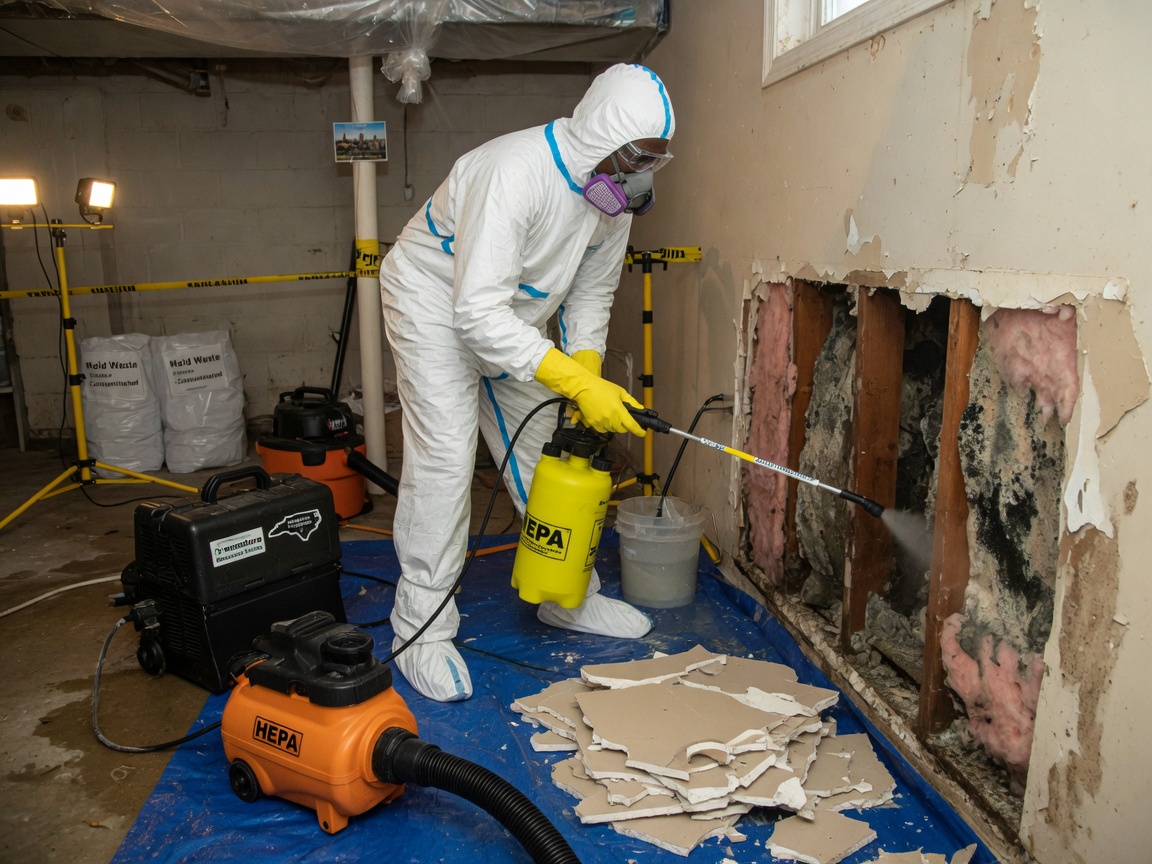
Gibsonville homes along Main Street and near Gibsonville Elementary School often face mold from the humid subtropical climate that settles into crawlspaces and attics during hot summers. The local housing stock includes many mid-century and older properties with limited ventilation, where moisture from mild winters lingers and feeds growth on wood framing. Our Greensboro-based crew responds directly to these 27249 addresses, assessing drainage around lots that slope toward the railroad corridor and treating affected areas without disrupting nearby parks or school zones.
Access in Gibsonville means working around narrow driveways off Springwood Avenue and coordinating with residents near the historic district to contain spores during removal. We focus on the specific water intrusion points common in Guilford County border homes, such as roof leaks after heavy rains or foundation seepage from clay soils. This targeted approach keeps the job contained to the property while respecting the compact neighborhood layout between Gibsonville and nearby Winston-Salem routes.
Around Gibsonville
We regularly work near:
- 📍Gibsonville Elementary School
- 📍Gibsonville Historic District
- 📍Main Street Gibsonville
- 📍Springwood Avenue
- 📍Gibson Park
Mold Removal Greensboro in Gibsonville — Local Notes
- •Older Gibsonville homes frequently have vented crawlspaces where summer humidity pools against cool soil, creating persistent mold on joists that requires dehumidification after removal.
- •Lots near the railroad tracks experience extra runoff during storms, pushing water against foundations and demanding perimeter drainage checks before remediation begins.
- •Mild winters keep ground temperatures higher, so mold in attics above uninsulated ceilings can reactivate quickly without full source removal and airflow correction.