2026-09-04 · Robert Ellis
What Affects Mold Removal Costs In Greensboro
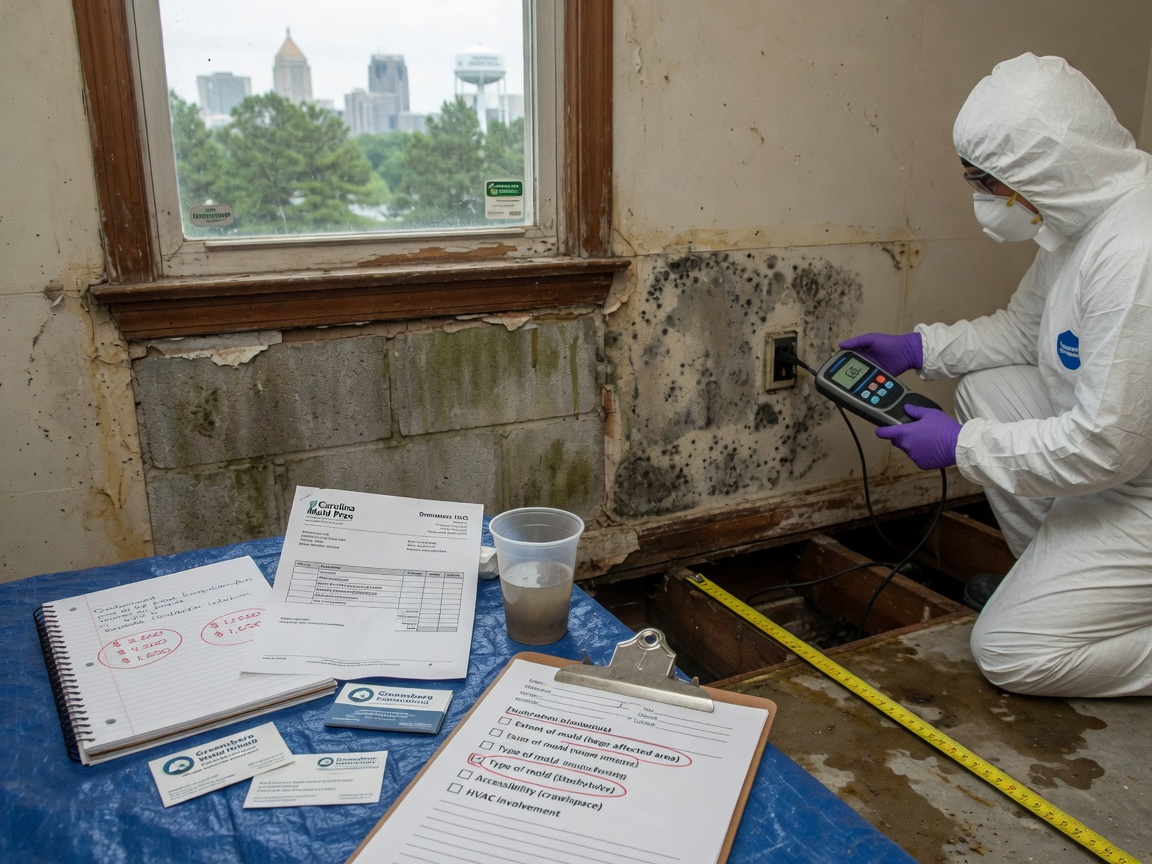
Mold removal costs in Greensboro range from $800 for contained bathroom jobs to $4,500 or more for whole-home remediation when moisture has spread through attics or crawl spaces. Several local variables determine the final price, including the square footage affected, the home's construction era, and how quickly humidity in Guilford County allows spores to multiply.
Size and Extent of Infestation
The physical area of visible and hidden mold sets the baseline price. Small patches under 10 square feet often stay under $1,200 because containment and removal stay limited to one room. Larger growth covering 50 square feet or more across multiple surfaces pushes costs past $3,000 because technicians must set up negative air machines, remove affected drywall, and treat framing in stages. In homes built before 1970 in Fisher Park and Lindley Park, insulation and lath-and-plaster walls frequently hide colonies, requiring extra demolition and inspection time that raises the total.
Homeowners in Downtown Greensboro and Westerwood often discover growth behind original plaster after roof leaks. These jobs require careful material disposal and multiple air scrubbers, adding $600–$1,200 compared with newer drywall homes. Accurate square footage measurement during the initial visit prevents surprise charges later.
Location and Accessibility Challenges
Where mold appears changes labor hours and equipment needs. Attic mold removal in Sunset Hills homes with low-pitch roofs and limited knee-wall access can add 30 percent to the bill because technicians work in tight spaces wearing full PPE. Crawl space jobs under 1950s bungalows in Lindley Park require vapor barrier replacement and dehumidifier installation, often totaling $2,200–$3,800.
Basements near the Greensboro Coliseum area sit on clay soil that holds moisture longer, increasing the chance of recurring growth if drainage is not addressed. Mold remediation protocols here include sealing foundation cracks before treatment begins. Homes near Winston-Salem with similar terrain face the same soil and grading issues.
Climate and Seasonal Moisture Patterns
Greensboro's humid subtropical climate with hot summers and mild winters keeps relative humidity above 60 percent for months, allowing mold to return faster than in drier regions. Summer storms and winter condensation on uninsulated ducts accelerate growth in attics and crawl spaces. Greensboro's humid climate and why mold grows so fast here explains how these patterns affect remediation timelines and costs.
Jobs scheduled after heavy spring rains often include extra drying time with commercial dehumidifiers, adding $300–$600. Properties in McLeansville and Pleasant Garden that sit in low-lying spots see higher moisture readings year-round, requiring longer equipment runtime before clearance testing.
Type of Mold and Required Containment
Most Greensboro jobs involve common allergenic molds that respond to standard removal and HEPA vacuuming. Black mold colonies that produce mycotoxins demand full containment rooms, negative air pressure, and specialized disposal, increasing costs by $1,000–$2,000. Black mold vs regular mold: how to tell the difference outlines visual and testing cues that determine protocol level.