2026-09-04 · David Harlan
How Long Does Mold Remediation Take In Greensboro?
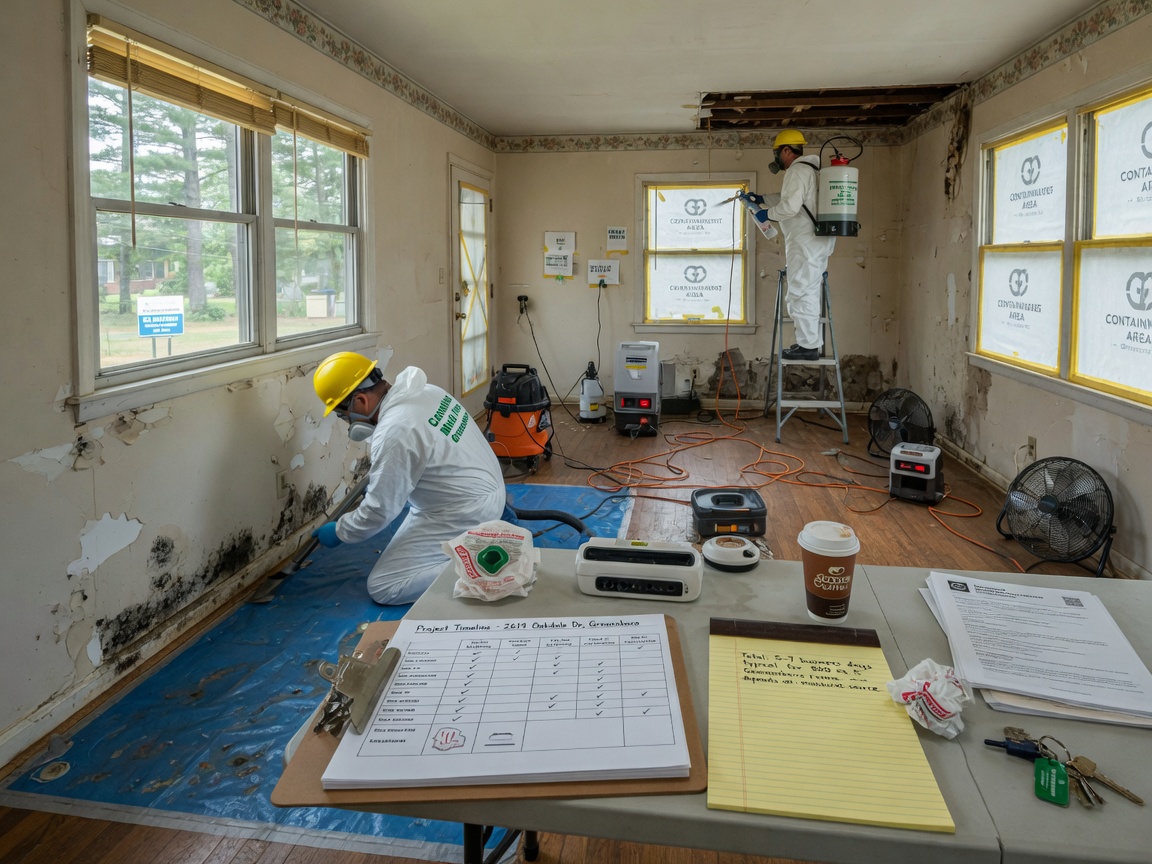
Mold remediation in Greensboro typically takes 5 to 10 days from the initial inspection through final clearance testing, though jobs in larger or older properties can stretch to 14 days when hidden moisture pockets require extended drying.
How Home Age and Neighborhood Affect Duration
Homes built before 1970 in Fisher Park, Westerwood, and Lindley Park often contain plaster walls and balloon framing that trap moisture behind layers of material. These details force technicians to open more surfaces than in newer construction, adding 2 to 4 days to the containment and removal phase. In contrast, post-1990 homes in Sunset Hills usually allow faster access because of standard 2x4 framing and accessible crawl spaces. The same humid subtropical climate that brings frequent summer thunderstorms also means older Guilford County basements stay damp longer, extending the drying stage after source removal.
Impact of Greensboro's Climate on Drying Times
High summer humidity routinely keeps relative humidity above 70 percent for days at a time, slowing evaporation even after dehumidifiers are running. Winter conditions are milder but still produce condensation on cooler surfaces in attics and crawl spaces, especially near the Greensboro Coliseum area where many homes sit on clay soils that hold water. Because of these patterns, technicians typically run commercial drying equipment for 72 to 96 hours minimum before moisture readings drop to acceptable levels. Skipping this step leads to recurrence, so the calendar time cannot be shortened without risking callbacks.
Step-by-Step Timeline from Inspection to Clearance
Day 1 usually covers a full mold inspection that maps moisture with meters and thermal cameras. Containment and removal occur on days 2 through 4 in most residential jobs. Negative-air machines and HEPA filtration run continuously while affected drywall, insulation, and trim are removed. Drying follows for another 3 to 5 days, with daily moisture logs to confirm progress. Final clearance testing happens only after readings stabilize, which is why the total span rarely drops below 5 days even on small projects.
Larger attic or crawl space jobs in areas like Downtown Greensboro often require an extra visit to treat hidden joists, which is why homeowners in those neighborhoods should expect the upper end of the range. Attic mold removal projects, for example, add time because insulation must be removed and replaced after the wood is treated.
Why Rushing the Process Creates Problems
Attempting to shorten timelines by skipping clearance testing or using insufficient drying equipment frequently results in mold returning within months. Local experience shows that homes near the International Civil Rights Center & Museum and in the older sections of Lindley Park benefit from the slower, methodical approach because previous water events have often affected multiple layers of material. The Mold Concerns In Historic Greensboro Neighborhoods post explains additional considerations for these properties.
Clear communication about daily progress and realistic completion dates keeps the job on track without unnecessary extensions.