2026-09-04 · Robert Ellis
When To Test Air Quality After Water Damage In Greensboro
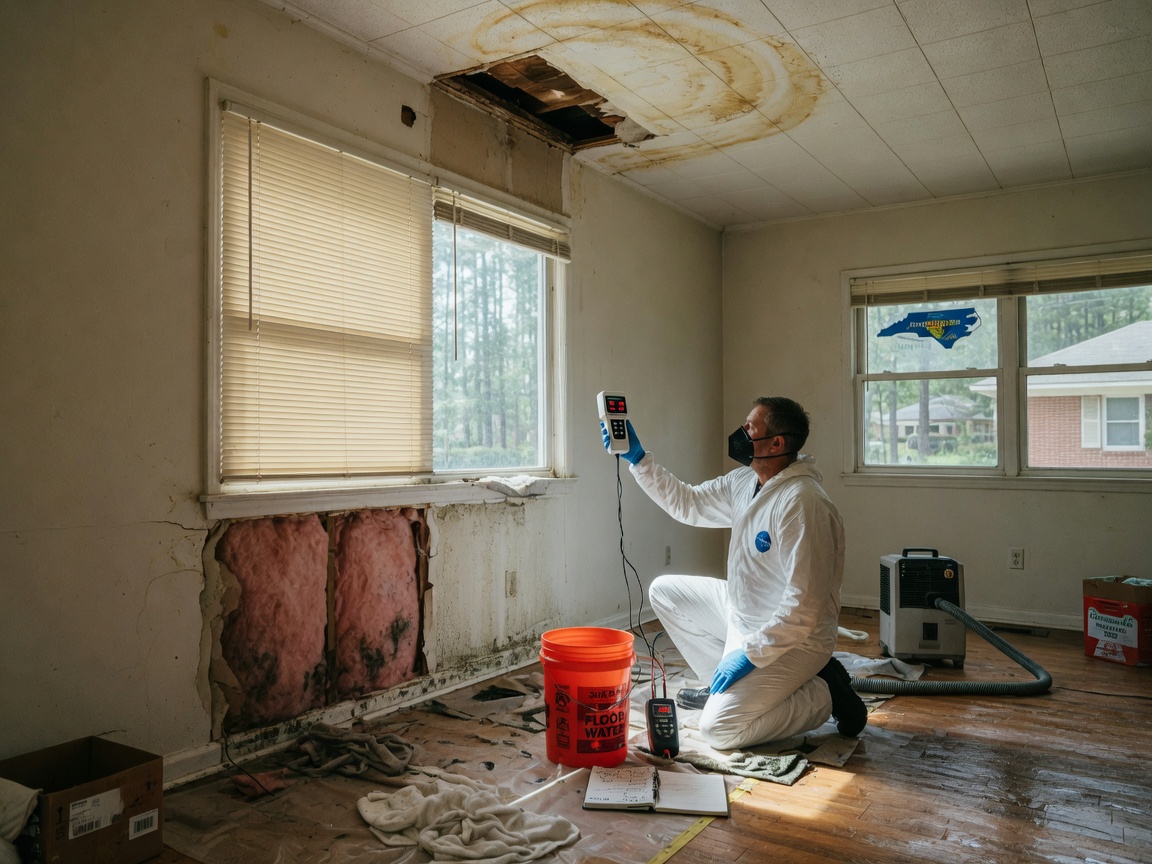
After water damage in Greensboro, schedule air quality testing 48 to 72 hours after the affected materials reach a moisture content below 15 percent. This window accounts for the humid subtropical climate with hot summers and mild winters that accelerates spore growth once humidity lingers above 60 percent. Homes in neighborhoods such as Fisher Park and Westerwood often feature older plaster and lath construction that traps moisture behind walls, making early testing essential before visible colonies appear.
Timing Air Quality Tests After Water Events in Guilford County
Water intrusion from summer storms or winter pipe bursts creates ideal conditions for mold in Greensboro's humid subtropical climate. Testing too soon misses hidden growth, while waiting beyond 72 hours allows spores to colonize insulation and subfloors common in Lindley Park bungalows. Local operators track indoor humidity with meters during the first 24 hours of drying, then return for spore sampling once surfaces stabilize. This sequence prevents unnecessary remediation in crawl spaces where groundwater seepage from red clay soils keeps relative humidity elevated year-round. Readers concerned about rapid growth should review Greensboro's Humid Climate And Why Mold Grows So Fast Here for seasonal patterns that influence these timelines.
Recognizing Hidden Moisture in Historic Greensboro Homes
Downtown Greensboro and Sunset Hills contain many pre-1950 structures with balloon framing and unvented attics that hold water long after visible drying. After a roof leak near the International Civil Rights Center & Museum area, for example, moisture migrates downward through multiple floors before settling in basement joists. Air quality sampling at this stage reveals elevated Aspergillus and Penicillium counts that standard visual checks miss. Property owners in these blocks benefit from targeted testing rather than whole-house scans because the terrain slopes gently toward Buffalo Creek, directing runoff into lower levels. Linking testing results to a full mold inspection helps map affected zones without over-remediating unaffected rooms.
Steps to Prepare for Accurate Air Sampling
Clear furniture and stored items from the testing zone 24 hours beforehand so technicians can access wall cavities and HVAC returns. Document any standing water events with photos and note the date water was extracted. In Westerwood duplexes, shared walls mean sampling both units if one experienced flooding near the Greensboro Coliseum. Technicians collect outdoor baseline samples first, then indoor air at breathing height and inside wall cavities. Results typically return within 48 hours and guide whether mold remediation is required before reoccupancy. Homeowners near Winston-Salem who commute through Guilford County can schedule Saturday morning appointments between 9am and 2pm when the Greensboro-based team is available.
When Retesting Becomes Necessary After Initial Remediation
Retest air quality 7 to 10 days after remediation finishes to confirm spore counts have dropped below outdoor baselines. This step catches regrowth in high-humidity pockets behind new drywall in Fisher Park renovations. Summer temperatures above 85 degrees combined with afternoon thunderstorms can reintroduce moisture through window seals, so retesting after the first heavy rain is prudent. Properties in Pleasant Garden or McLeansville with well water systems sometimes see elevated readings from condensation on supply lines. Consistent documentation of these follow-up tests protects resale value when buyers request mold histories for Guilford County transactions.