2026-09-04 · David Harlan
Mold Removal Vs Mold Remediation: What's The Difference?
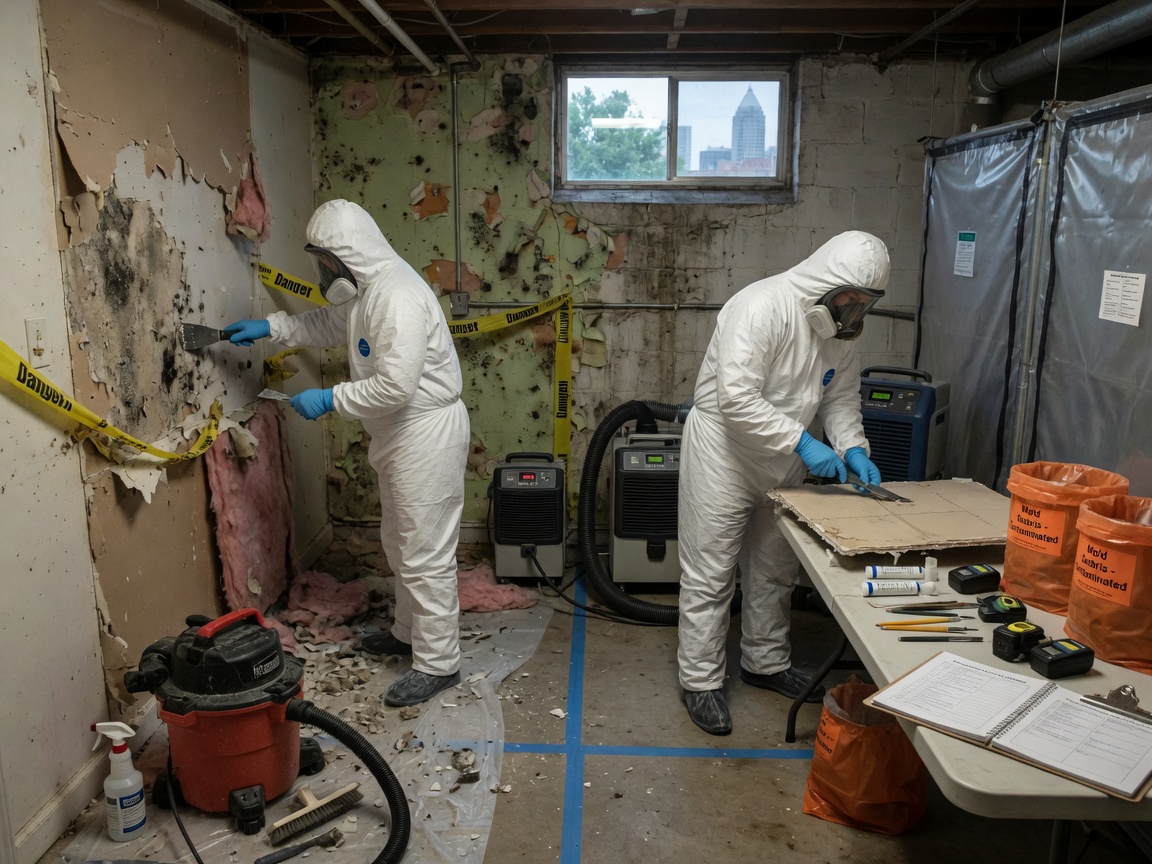
Mold removal eliminates visible colonies on surfaces while mold remediation identifies and corrects the moisture source to stop regrowth. In Greensboro's humid subtropical climate, where hot summers drive condensation in attics and crawl spaces, the distinction matters most for homes built before 1980 in neighborhoods such as Westerwood and Lindley Park.
Defining Mold Removal
Mold removal focuses on physically extracting growth from accessible surfaces like drywall, wood framing, or insulation. Technicians use HEPA vacuums, antimicrobial agents, and containment barriers to capture spores without spreading them into living spaces. This approach works when the affected area stays under 10 square feet and the moisture problem has already been fixed. In Guilford County homes near the Greensboro Coliseum, removal often handles post-leak spots in bathrooms or kitchens where humidity spikes during summer. It does not include air testing or source correction, so homeowners must confirm the leak is resolved first. Removal typically finishes in one to two days once containment is set.
Defining Mold Remediation
Mold remediation expands beyond extraction to locate and eliminate hidden moisture sources that allow spores to return. The process starts with moisture mapping using meters and infrared cameras, followed by drying equipment, dehumidification, and sometimes HVAC cleaning. In older Sunset Hills properties or Fisher Park bungalows, remediation often requires accessing wall cavities or crawl spaces where groundwater seepage occurs after heavy rains. Protocols follow IICRC standards for containment and disposal. Remediation projects in Greensboro commonly run three to seven days and include follow-up checks to verify relative humidity stays below 60 percent. This method prevents repeat issues common in the Piedmont Triad's mild winters when indoor heating meets outdoor dampness.
How Local Conditions Influence the Choice
Greensboro's climate produces frequent condensation in unvented attics during July and August, pushing many Lindley Park homeowners toward remediation rather than simple removal. Older housing stock in Downtown Greensboro and Westerwood features plaster walls and crawl spaces that trap humidity, making source correction essential. Proximity to Winston-Salem means similar red-clay soils that hold water against foundations, increasing basement mold risk. When growth exceeds 10 square feet or appears in multiple rooms, remediation becomes the practical route because removal alone leaves the humidity driver untouched. Local terrain with gentle slopes directs runoff toward lower lots in Pleasant Garden, further tilting decisions toward full remediation.
Steps in a Typical Greensboro Project
- Initial assessment identifies visible growth and moisture readings.
- Containment isolates the work zone with plastic sheeting and negative air machines.
- Removal extracts colonies from surfaces using HEPA equipment.
- Source correction repairs leaks, improves ventilation, or installs dehumidifiers.
- Drying and verification confirm moisture levels drop below 16 percent on wood.
- Final cleaning clears residual spores before containment comes down.
These steps apply equally to properties near the International Civil Rights Center & Museum or the Greensboro Science Center where historic construction limits access.
When to Select One Over the Other
Choose removal for isolated spots after a known plumbing fix in a Sunset Hills kitchen. Opt for remediation when growth returns within months or when humidity stays elevated in crawl spaces common to Guilford County. Homes in Kernersville or Jamestown often need the broader approach because of shared drainage patterns that keep soil wet. Linking removal to ongoing moisture control avoids the cycle of repeated treatments that many Piedmont Triad residents face each spring.